Changing the Status Quo
The healthcare industry has the most to gain from breakthrough technology innovation. The current monolithic application architectures and institution-centric approaches to interoperability and information sharing are wholly inadequate to the unique challenges in healthcare. The result is poor adoption of healthcare information technology by a fragmented, inefficient healthcare system with minimal data sharing, poor coordination, limited decision support, and misaligned incentives.
The most promising approaches to improving healthcare outcomes and controlling costs- including medication management, evidence-based medicine and administrative simplification- revolve around patient-centric, coordinated care. Each patient has a unique network of clinicians, pharmacists, caregivers, and family members that support their care. Collectively, these people comprise a Personal Health Network (“PHN”) for that particular patient. Each of the participants in a PHN needs the ability to access sensitive data from a variety of disparate sources, to analyze the data and make decisions results about the patient’s care, to collaborate with other participants, and to receive timely, convenient clinical notifications. Current systems do not support such workflow and collaboration because there has been no way to effectively handle the security and privacy concerns.
Patient-Centric Healthcare via Personal Health Networks
Resilient Network Systems' servers provide an innovative way to link existing applications, analytical services, and information sources controlled by different organizations into a shared resource. The “Trust Network” created by these servers allows for members of a PHN across multiple organizations to be loosely-integrated and collaborating with each other, dynamically, for the first time. Now, each person can access a personalized, web-based application that presents information, decision support and collaboration capabilities drawn from various sources across the Internet. The content presented will vary, based on what data and analytic resources are appropriate for each patient and the specific role that user is playing in supporting that patient’s care.
Provider groups will not need to have electronic health records applications (EHRs) in order to participate in this Trust Network. Any patient, clinician or caregiver whose identity can be verified by the network will have access via web browser, email, phone and/or fax. Existing applications and portals can be easily configured to serve as web access points so that providers can participate using the applications they know and trust without disrupting their existing workflows.
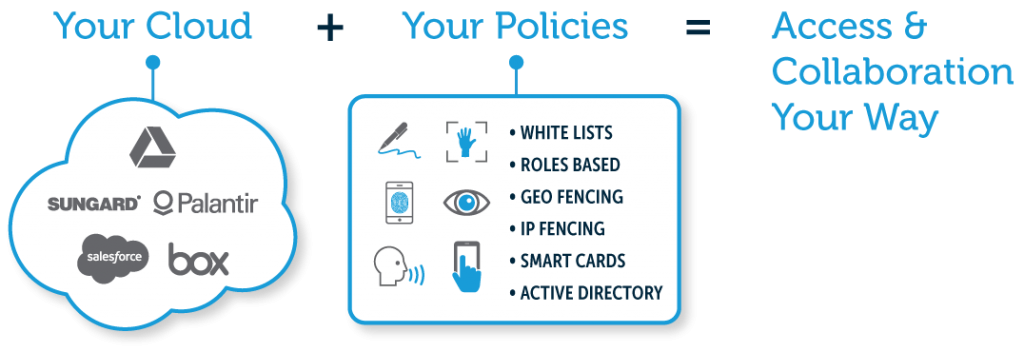
Within the Trust Network, security, privacy, and rights management will be enforced by a neutral network of services that authenticate and verify the identity and credentials of users, manage consent and authorization, handle records retention and disclosure management, and maintain access control audit records. This will support precise, end-to-end control over patient information—all the way down to an individual user accessing a single patient record for a specific purpose in a single episode of care. Thus, organizations that contribute content to a patient’s PHN will not need to agree upon policies or rely upon the security and privacy enforcement of other participants. In short, it will be possible to share information and resources with a patient’s caregivers without assuming underlying agreement on policies, without forcing participating organizations to establish reciprocal data sharing agreements, and without requiring them to trust each other regarding how that data is used.
Trust Networks will make it possible for analytic services to aggregate and analyze patient-centric longitudinal health histories in the cloud. These will be invaluable for clinical decision support, patient safety analytics, quality analytics, medication adherence, patient messaging, and other uses.
By enabling neutral enforcement of data security and privacy at the level of specific individuals and specific uses, the Trust Network enables PHNs to side-step most of the legal, administrative and competitive obstacles that plague traditional institutional approaches to health information exchange.
Resilient is working with dozens of innovative healthcare companies today to make this vision a reality in 2010.
|